RECEIVING FORGIVENESS (Forgiveness series 18)
The habit of judging and condemning others is usually a great deal more serious blemish than are the things we so glibly point out as flaws or faults. – Anonymous
Lessons from American Legal History
Forgiveness is a gift, which can be received or refused. American legal history has clear illustrations of this position. Very recently, Michael Cohen, an American attorney and former lawyer to President Donald Trump, was granted presidential pardon for charges of electoral fraud to which he had pleaded guilty. Cohen’s lawyer however insisted that the pardon would be rejected. This sometimes happens because someone feels that accepting pardon means admitting to the guilt for which the pardon has been offered.
On May 27, 1830, George Wilson and co-conspirator James Porter were sentenced to death on charges of robbery. One month after, the sentence was carried out on James Porter. In response to public appeals, however, President Andrew Jackson decided to grant pardon to George Wilson in 1833. Strangely, the pardon was refused. George Wilson made his choice rather for death. It became a landmark case in that country’s Supreme Court: United States v. George Wilson. Thereupon, the Supreme Court ruled as follows: “The court cannot give the prisoner the benefit of the pardon, unless he claims the benefit of it…. It is a grant to him: it is his property; and he may accept it or not as he pleases.” John Marshall, who was Chief Justice at the time, wrote:
A pardon is an act of grace, proceeding from the power entrusted with the execution of the laws…. (But) delivery is not completed without acceptance. It may then be rejected by the person to whom it is tendered, and if it is rejected, we have discovered no power in a court to force it on him (http://mentalfloss.com).
Forgiveness cannot be forced upon anyone. It may be received or rejected by the one to whom it is offered. Even God does not force mercy upon a person, gracious as mercy is, but leaves it to the discretion and choice of the individual, as we hear in the following declaration:
Today I have given you the choice between life and death, between blessings and curses. Now I call on heaven and earth to witness the choice you make. Oh, that you would choose life, so that you and your descendants might live! (Deuteronomy 30:19, New Living Translation).
Lessons from the Bible
A cheerful heart is good medicine,
but a crushed spirit dries up the bones (Proverbs 17:22, New International Version).
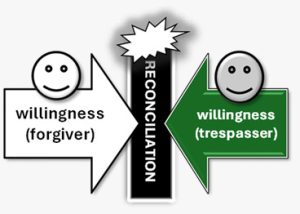
Forgiveness given but refused frees the forgiver; it does not benefit the trespasser. However, forgiveness requested but refused, frees the trespasser while the other dries up from the emotional toxins of bitterness and vengeance (Proverbs 17:22). Forgiveness is not forced; it is a choice on the part of giver and receiver.
The free will of the parties is important in conflicts resolution. We find willingness expressed in the language of the prodigal son when he said again and again ahead of meeting his father, “I will… I will” (Luke 15:18). His will was further demonstrated in his voluntary homeward steps. The father was also willing, and had been looking out with longing. When he sighted the returning son from afar, he could contain the emotions no longer. His brisk steps towards that son were the further expression of his willingness.
Forgiveness is never forced – from forgiver or upon trespasser. The sinner cannot say to the one that they have transgressed, “You must forgive me now.” Not even a superior can compel the person trespassed against to forgive, by saying, “I am your boss after all, so you have to forgive that person NOW.” It may be robbery of a kind to force from someone something that they are unwilling to give, whatever it is, so far as the right to give it is theirs. In the parable of the unforgiving servant (Matthew 18:32-33), although the unforgiver was punished for his act of unforgiveness, he was never compelled by the king to forgive. In the Lord’s Prayer, too, although the consequences of not forgiving are spelled out, forgiveness is still left as a choice to be made (Matthew 6:12,14).
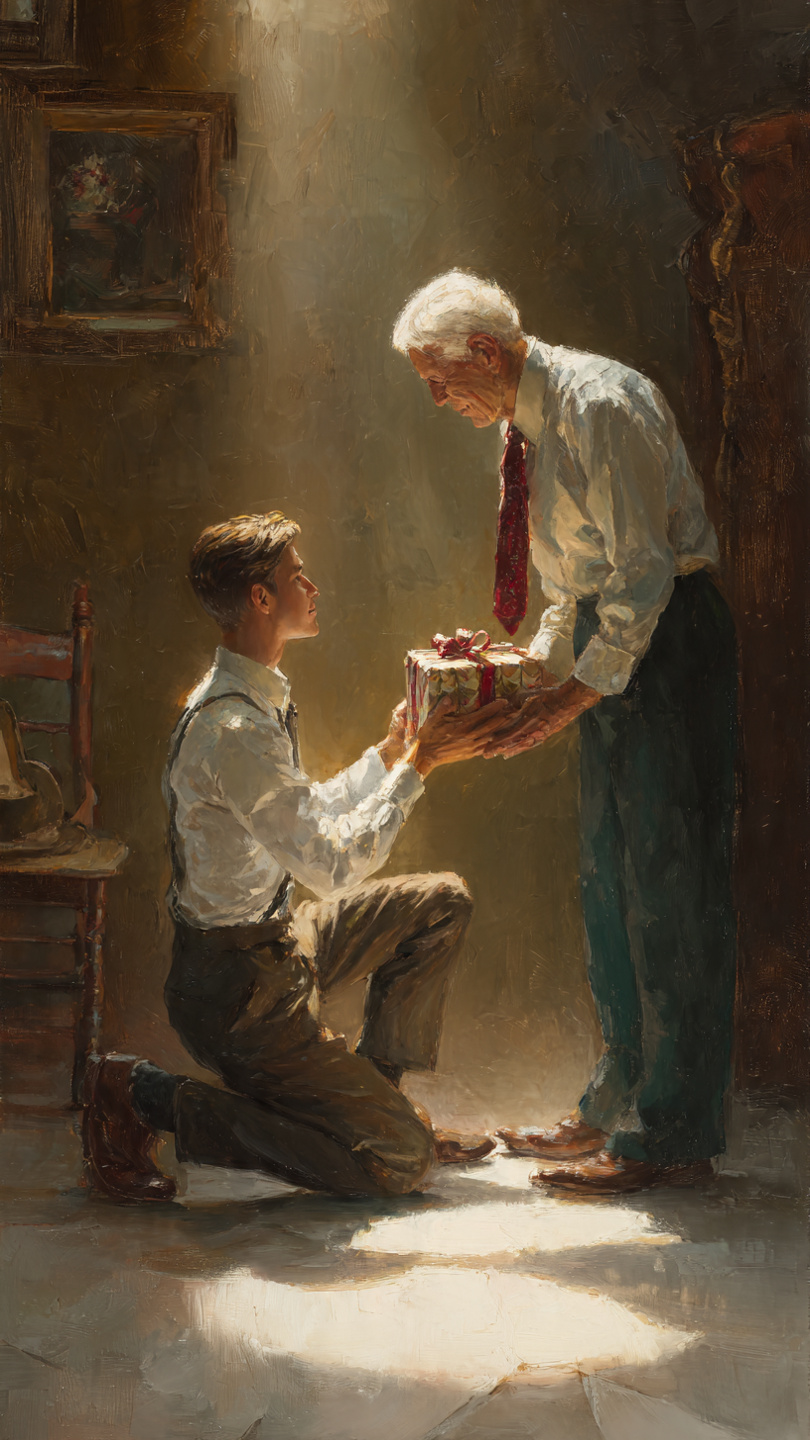
Just as the trespasser cannot force forgiveness from the trespassed, the forgiver cannot force it upon the trespasser. They cannot say, “Hey, come here. You must forgive me” or “You must accept my forgiveness.” Any gift forced upon another is not a gift anymore. Everyone would suspect the intent of such a package. It could be a decorated time bomb. Willingness must meet with willingness from both trespasser and forgiver for there to be a true feast in the house to cement the restoration.
What gave the prodigal son the confidence to return was what he knew of his father. He knew that there would be forgiveness waiting for him – at home. He confessed his awareness that his good father had servants at home who were enjoying a better deal than his false life had brought upon him. He was ready to return (Luke 15:17). The celebration that followed in the house was because willingness met with willingness in trespasser and forgiver. Each was not only willing but made his advance towards the other. One walked backwards in initiation of the repair process, the other ran forward in reciprocation. They met midway, in the father’s territory, then walked home together, willingly. Tough as it might be, try to keep an open window.
Willingness does not hide; it usually finds expression in the homeward steps it takes towards resolution. One who says that they are willing yet are reluctant to leave their address at the Far Country, are merely seeking a good name for their wrong place. Anyone giving ‘Far Country’ conditions for the pardon they are expecting from Daddy, in Daddy’s own house, are not yet the penitent picture that they paint of themselves in public. When the prodigal son said, “I will,” it was followed with something that the father could see and respond to with a race out of his house towards the willingness concretized in the homeward steps, feeble and staggering though those steps might have seemed.
Willing and Obedient
Not only between humans but also in God’s dealings with mortals, we find respect for individual choice. For example, in Isaiah 1:18, God’s invitation to the ‘bloody’ sinner states, “Come now, and let us reason together …though your sins be as scarlet, they shall be as white as snow; though they be red like crimson, they shall be as wool.” To that generous invitation, however, He quickly adds a conditional clause in recognition of the power of personal choice in accepting or rejecting the pardon being offered: “IF ye be willing and obedient, ye shall eat the good of the land” (v.19). “If…” There would be a feast beyond the pardon; an eating “together” from “the good of the land,” but only “if…”
To “come” is a choice; a choice to leave somewhere for somewhere else; it is a physical, see-able process beyond words heard, or in furtherance of words heard. Unfortunately, opportunities do not always linger long. One does not have forever to make a choice. In Isaiah 1:18, the divine invitation puts a timeframe to the offer: “Come NOW,” the implication being that the offer could be forfeited after “now.” Hell is populated with people who waited too late to make up their mind about God. They missed Mercy’s moment.
Note in that invitation: willingness AND obedience. Obedience to what? Obedience to law, to instructions, to previously broken boundaries. Willingness without obedience is crisis. Willingness to return to Daddy’s lavish home without willingness to obey and respect ‘house rules’ is merely a covert ploy to import Far Country manners into a loving father’s estate, thus continuing the prodigal culture under a new roof; it is to continue an old game under a new name. So, even God does not force forgiveness, but forgiveness is not without conditions. There has to be willingness to reconcile with the Trespassed Boss on high; willingness to have the bloody past erased, but willingness matched with obedience; willingness to receive pardon as well as willingness thenceforth to obey rules. I see three possible conditions or permutations of the two states highlighted in Isaiah 1:18:
-
-
- “willing and obedient” – (this person is ready for peace);
- ‘willing’ but rebellious; willing to be forgiven and restored, but unwilling to obey house rules for the sustenance of the peace (this one has a hidden agenda in seeking ‘forgiveness’);
- unwilling and stubborn; unwilling to receive forgiveness, unwilling to take orders or obey rules (this one has not hidden their unpreparedness for peace).
-
Magnanimous as divine forgiveness is, it also respects the will or choice of the receiver. In Moses’ dealings with Israel in the name of God, we similarly find the strong element of choice to receive or reject the offer of mercy.
15 “Now listen! Today I am giving you a choice between life and death, between prosperity and disaster. 16 For I command you this day to love the Lord your God and to keep his commands, decrees, and regulations by walking in his ways. IF you do this, you will live and multiply, and the Lord your God will bless you and the land you are about to enter and occupy.
17 “But IF your heart turns away and you refuse to listen… (Deuteronomy 30:15-17, New Living Translation).
Jesus met a sick man whose need seemed so apparent that it required no probing, yet Jesus posed the question: “Wilt thou be made whole?” (John 5:6). In other words, “Are you willing to be healed?” What a preposterous question, you might exclaim! Which sick person does not want healing? Still, Jesus asked. Even healing was not going to be by force. Individual choice is crucial in restoring relationships, even with God. Nobody can force two unwilling people to walk together (Amos 3:3). They might start the walk but not continue, if it is forced upon either of the parties. Free as forgiveness might be, it respects the will of the parties.
Culled from Chapter 10 of the book Forgiveness …

GET THESE BOOKS …
One year ago, in March 2025, we posted the last in the series from the book on Forgiveness, thereafter commencing the serialisation of the book, One Woman, Five Husbands: Christian Marriage, Divorce and Remarriage and other messages that followed, prophetically addressing the seasons. Copies of that classic book on Christian marriage and divorce have been out since September 2025. We are urged to return and resume the series on Forgiveness from where we paused a year ago.
For copies of the book Forgiveness (and others not yet out of print), kindly reach us through the contact details provided, or visit the online shops through the links supplied below for the electronic editions of the books so listed – at Amazon and Selar books.
- https://selar.co/m/kontein-trinya1?search=forgiveness – Forgiveness
- https://a.co/d/01BtigEN – One Woman, Five Husbands: Christian Marriage, Divorce and Remarriage
- https://selar.co/903394 – Balaam
- https://selar.co/1g4486 – Stray Bullets
- https://selar.co/443i94 – Mystic Markets
- https://selar.co/q4454b – Beyond Holiness


The Preacher is an awesome teacher. The spiritual meals he offers have always been timely and timeless. This one is no exception.
God bless you, Sir. May He keep you strong and in radiant health in Jesus’ name. Amen.