

It is often said that if someone has peace about a matter, they must be in the will of God. That is not always true. All peace in a storm does not translate into the approval of God.
Month: December 2025
WHEN WHAT IS RIGHT DOES NOT SEEM FAIR
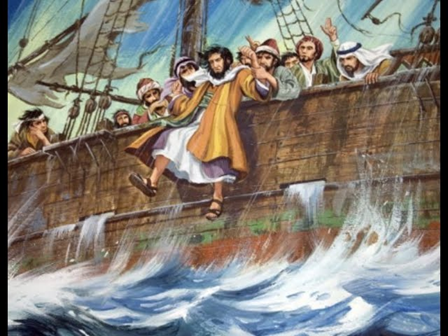
Nevertheless the men rowed hard to bring it to the land; but they could not: for the sea wrought, and was tempestuous against them.
Jonah 1:13.
What is right does not always seem fair. Not all right prescriptions are sweet. That is one strange message from the story of Jonah.
There had been a storm, with much loss of time and property on account of one strange passenger on the ship. The mariners cast lots to determine the source of their woes. Mercifully, God answered them in that language, as He usually speaks to everyone in their ‘native’ language. Jonah did not need to cast lots to know the mind of God, but those mariners were not prophets, like Jonah. They did what they knew how to, and God answered them all the same, in their ‘language.’ The lots fell on Jonah.
Then came the prescription for ending the storm: cast the storm’s culprit out of the ship. But those were nice men, kinder than angels, too religious to be right, too disciplined to do something so drastic, even if it was the will of God. They ‘loved’ Jonah more than his God loved him. They had an option: they would rather row harder. They did, with greater vigour, trying to ‘fix’ the problem
DISCERNING STORMS

1. Once Upon an Intelligent Storm
It is critical to discern storms. Some storms are natural, some are not, and nature carries its markers of times and seasons (Matthew 16:3; Genesis 1:14). For instance, the “great storm” that “arose” to challenge Jesus and His disciples on their collective mission to “the other side” of their further missionary assignment was no ordinary storm. It was a storm that could “obey,” meaning that it could hear, meaning that it had ears, meaning that it had some kind of volition and intelligence (Mark 4:35-41). Maybe it was a he or a she of some strange sort, as modern meteorologists would categorise.
That storm “arose,” as if it had been sitting tactically still, monitoring the sea, until Jesus with His disciples, like a long-tracked enemy, appeared on its marine radar. It was a storm whose strange and sudden ‘arising’ had to be matched with the superior arising of the Master of the storms and the seas in that boxing arena of the Galilee Sea. It “arose … And he arose.”
The Messengers of God

1. An Amazing Paradox
As if some mischievous, mysterious logistics officer had been planning the trip, Jonah readily found a ship to take him in a different direction from the purpose of God. To stop him, “the LORD sent out a great wind into the sea, and there was a mighty tempest in the sea, so that the ship was like to be broken” (Jonah 1:4). Alas, the amazing paradox: the Lord sent Jonah, he disobeyed; the Lord “sent” a wind, it obeyed, promptly; one faithful messenger commissioned against the other straying messenger.
2. The Messengers of God
The messengers of God are not only angels and prophets. Some are winds and storms (as those that stood in the way of Jonah’s rebellious trip to Tarshish), some are birds (as those that regularly supplied Prophet Elijah with food in his wilderness days – 1 Kings 17:6), some are donkeys (like the eloquent four-legged ‘prophet’ that God quickly ordained to restrain the straying Prophet Balaam blinded by greed – Numbers 22:27-30), and some are plagues (like those that Jehovah “sent” upon Egypt and Pharaoh their king, to “let my people go” – Exodus 7:5).
A Ship to Tarshish

But Jonah rose up to flee unto Tarshish from the presence of the LORD, and went down to Joppa; and he found a ship going to Tarshish: so he paid the fare thereof, and went down into it, to go with them unto Tarshish from the presence of the LORD.
Jonah 1:3.
Jonah “rose up to flee” from the purpose of God, and “he found a ship.” You will always find a ship when you choose to go away from God. There will always be a ship to take one in the opposite direction from the will of God, but whether or not that ship arrives at the intended destination is another story. Safe arrival is never guaranteed in that package. The parable of the prodigal son teaches the same lesson. There is usually somewhere to go when one chooses to depart from the Father’s house, some “far country,” but survival there is never included in the ‘attractive’ package (Luke 15:13).
GARMENTS FOR SWORDS

On the sober night before His betrayal and crucifixion, Jesus said to His disciples, “…he that hath no sword, let him sell his garment, and buy one” (Luke 22:36). In other words, if anyone had to choose, in those last days of spiritual contentions, like ours, between weapons and outer clothes, one should choose weapons, even if that meant foregoing clothes.
Unfortunately, the reverse is the case in these last days. Men are “lovers of their own selves” and “lovers of pleasure more than lovers of God” (2 Timothy 3:2,4). They would rather sell their sword to buy an additional garment than sell their garment for a sword. The implication is that men are more carnal than spiritual; more comfort-loving than battle-ready. The market for garments thrives, even Babylonish garments that bring a curse upon families and upon the entire army of the Lord, such that those who yesterday had celebrated a victory over mighty Jericho are today routed by little Ai (Joshua 7:21). Meanwhile, the foundries for swords have diminished out of the land. Some have closed shop and fled, others are adapting to beating swords into spindles and needles.
The Successful Ministry

What is God’s definition of success in ministry? What are the indicators that one is doing well or has done well in the assignments from God? Is it the size of the followership? Is it the generous reception that one gets from those to whom one is sent? Is it the massive hosannahs and lavish palm fronds with which the way is paved for the sent one? Or is it the cross that the call attracts?
In Exodus 3:16-19, God sent Moses to two groups: the elders of Israel and Pharaoh, the king of Egypt. Of the elders, God assured Moses that they would receive his message, that “they shall hearken to thy voice.” That was good news. That is the kind of reception every messenger expects for his efforts.
Unpardonable Feasts

Once in a while, the time comes to fast rather than feast. The wrong choice at such times is usually not without significant consequences.
Many years ago, when that word first came, I published it across the land. Then I got invited to an eminent peoples meal function in an eminent hotel by an eminent Christian outfit. I accepted with hesitation to be present, but it became clearer with time that the season had changed. I went. From the very entrance to the banquet, one was welcomed to a variety of inviting delicacies. I cast a sober glance at the tables and walked on, with no reproach against those who stopped where I couldn’t. We probably hadn’t all heard the same sound in that season.

