
UNPRAYED PRAYERS AND CARNAL SWORDS
40 And he cometh to his disciples, and findeth them asleep, and saith unto Peter, What, could ye not watch with me one hour?
41 And he came and found them asleep again …
42 And he left them, and went away …
Matthew 26:40, 43, 44.
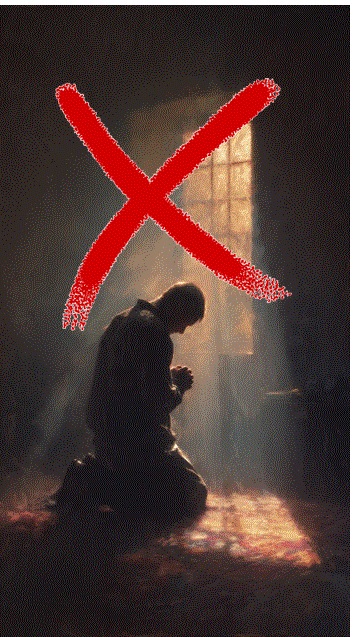
The night before Calvary, Jesus retreated into the Garden of Gethsemane for a crucial engagement with the Father. That was one night to decide many other nights and days, and many lives. Jesus took His disciples along. He needed their presence and their prayers. As they entered Gethsemane, He told the first group, “Sit ye here,” and He took the few others farther and urged them not to sit, as He had told the previous company, but to “watch with me” – for one hour. Then He went further than them all, to “pray yonder.” Jesus trusted them with His burdens in that historic night.
Unfortunately, every one of them slept off, even the second group, with reasonable excuses of fatigue. From His prayer station at the farthest point, Jesus came back, specifically to the second group, the sleepers whom He had stationed to pray, urging them up to watch and pray. Two times – an hour apart, He went back to wake them, because there was coming a “temptation” that would be earthshaking, and His soul was “exceeding sorrowful, even unto death” (vv. 36-38). But they slept – the sleep of death.
When Jesus came back the third and final time to that group, after two futile attempts to awaken them from slumber, it was no longer to prompt them to prayers; it was to announce how close danger had come, and that the situation had prayerlessly (or prayer-absently) gone out of hands; in fact, that it had gone beyond prayers, beyond late prayers, no matter how desperately fervently then they would pray the belated prayers. Jesus announced to them, without condemnation, but with the finality of a judge, “Sleep on NOW, and take your rest: it is enough, the hour is come.” Then He added, “Rise, let us be going,” as if to say, “Case closed! Too late now to pray” (Mark 14:41; Matthew 26:43-47).
First, “He left them“; next, He “went away!” They had been “found … asleep again.” After He had left them the final time, and come back to announce how past prayers the time was, Judas arrived, with his “great multitude with swords and staves.” Alas, “My Spirit will not contend with man forever” (Genesis 6:3, NIV). Master, leave us not alone to Judas and his nocturnal marauders with swords and staves. (Matthew 26:43-55). Amen.
There comes a point after which the Spirit’s attempts to stir one into prayer may cease. If one should prove unfaithful, by refusing to respond to successive promptings, the Spirit may depart. Sometimes, He wakes up someone to pray, and they might say, “The flesh is weak; the spirit also,” and He departs as they fall back into sleep, only to be woken in the morning with the shocking breaking news that their father had died in an accident that night – “while men SLEPT” (Matthew 13:25); or that their safe had been broken into by thieves, at about the time the Spirit was striving with them to get up to pray.
Often, at such “breaking news” of a sudden disaster, sleep flees, no matter how deep the devil sleep had been, no matter how fatigued the flesh. Then there is agitation into anxious, instant, earnest prayers, but usually then, the spirit is dead, and the lips are dry; the mind is blank or fogged, and there is hardly a word to pray. Then the ear hears those terrible words, with a tang of irony: “Sleep on now and take your rest. It is enough. It was sleep you wanted. Go ahead and sleep more, if you can. Behold, ‘the hour’ of which I warned is come. Arise and let us be going from this place of missed prayers, and be prepared hereafter to squarely confront in the flesh what you could have conquered prayerfully in the spirit” (vv.45-46).
There comes a time when some prayers are best prayed, and had better been prayed. Prayer is powerful, but late prayers could be as useless as no prayer at all. As there is “a time for everything” (Ecclesiastes 3:1), so also is there a (best) time to pray certain prayers, and a time no longer to waste prayers. Late prayers usually cost much more than the sacrifice it might have taken to pray the previous prayers. Belated prayers cost time, energy, sleep, more prayers, money, peace of mind, and much more than a timely prayer might have meant.
A prayer delayed could be a prayer too late! When it was past the time to pray, and Judas had come with his gang, Simon Peter felt forced to resort to manual efforts, with the sword of the flesh. Even that, the Master said, was too late. He told Peter, “Put up again thy sword into his place” (Matthew 26:52). It had been energy spent in vain to remedy the consequences of one prayer not prayed. Late prayers and unprayed prayers often turn out to be far more expensive than the sacrifice of sleep or of the other comforts that stole the timely prayer.
Sometimes, some Simon Peter, in a present desperation arising from arrears of unprayed prayers in sleepful nights, tries to contain the present emergency with late carnal might: a sword, plus some fisherman’s strength and ruggedness, then somebody’s ear is off! But how many ears cut off with one late sword can restore the losses from one night of unprayed prayers? How far can one fleshly arm go against so fierce a satanic opposition personified by so great a “multitude” of hostile soldiers, with their “swords and staves”?
If any ears should be cut off, should it be the ears of the comers on assignment from their masters, or the ears of the company of sleepers, who had failed to heed the alarm to be up and pray? Alas, how desperately and carnally far we go when we have failed in pre-emptive prayers. Swords have their place, but late swords, like belated prayers, are flesh, and “By strength shall no man prevail” (1 Samuel 2:9).
If God should call you while you are sleeping, or chatting, or visiting, or even about to eat; if He should call you back even after you have just answered an earlier call, be prepared to say, like little Samuel, “Speak, LORD; for thy servant heareth” (1 Samuel 3:9-10). Be watchful, and ready to respond, like a soldier, “And grieve not the holy Spirit of God” (Ephesians 4:30). Never let the Lord depart on account of constantly scorning His promptings, because “He, that being often reproved hardeneth his neck, shall suddenly be destroyed, and that without remedy” (Proverbs 29:1, NIV).
According to the prophet Isaiah, even with prayers, there is an “acceptable time”; an acceptable time when cries are better heard, and “a day of salvation” when help is nearer than on other days (Isaiah 49:8). Furthermore, in Isaiah 55:6, the prophet warns, “Seek ye the LORD WHILE he may be found, call ye upon him WHILE he is near.” The word “while” suggests that a time comes when the Omnipresent God may no longer be found, the fervency of the late search notwithstanding; a time when, no matter the intensity of the late cries, He will have gone too far away for the call to be effective. As if that was his secret, David announces, “But as for me, my prayer is unto thee, O LORD, in an acceptable time” … prayer … in an acceptable time (Psalm 69:13).
In Proverbs 1:24-28 and 33, God warns,
24 Because I have called and ye refused; I have stretched out my hand, and no man regarded;
25 But ye have set at nought all my counsel, and would none of my reproof;
26 I also will laugh at your calamity; I will mock when your fear cometh upon you;
27 When your fear cometh as desolation, and your destruction cometh as a whirlwind; when distress and anguish cometh upon you.
28 Then shall they call upon me, but I will not answer; they shall seek me early, but they shall not find me:
33 But whoso hearkeneth unto me shall dwell safely, and shall be quiet from fear of evil.
If He should ever summon you to prayer, never say, “The spirit is willing but the flesh is weak.” Never say you cannot be up to watch with Him. It might be in your own interest after all – for just one hour. Do not, like Esau, sell your cherished prayer time for a pot of pottage, a pot of sleep, an hour of obscene ungodly fun. You could come back afterwards with “no place of repentance” in repair of the damage caused, even if you should seek it “carefully with tears” (Hebrews 12:17).
Never say, like Lord Felix, “Go thy way for this time; when I have a convenient season, I will call for thee” (Acts 24:25), for the “convenient season” may never come, not after Judas and his cohorts have ruined Gethsemane and gone with your Master. Carnal swords may not suffice where timely prayers did not prevail. Many carnal swords can never rectify the damages from one unprayed prayer, for “By strength shall no man prevail.” Amen.
From the Preacher’s diary,
June 26, 1988.
(first published in August 1988, The Preacher series No 52)

GET THESE BOOKS …
One year ago, in March 2025, we posted the last in the series from the book on Forgiveness, thereafter commencing the serialisation of the book, One Woman, Five Husbands: Christian Marriage, Divorce and Remarriage and other messages that followed, prophetically addressing the seasons. Copies of that classic book on Christian marriage and divorce have been out since September 2025. We are urged to return and resume the series on Forgiveness from where we paused a year ago.
For copies of the book Forgiveness (and others not yet out of print), kindly reach us through the contact details provided, or visit the online shops through the links supplied below for the electronic editions of the books so listed – at Amazon and Selar books.
- https://selar.co/m/kontein-trinya1?search=forgiveness – Forgiveness
- https://a.co/d/01BtigEN – One Woman, Five Husbands: Christian Marriage, Divorce and Remarriage
- https://selar.co/903394 – Balaam
- https://selar.co/1g4486 – Stray Bullets
- https://selar.co/443i94 – Mystic Markets
- https://selar.co/q4454b – Beyond Holiness


This message has bless my soul
we can never tell the extent of the victory we can have except we pray. Although Jesus death or dying is an issue that has been determined from the foundation of the world, probably the apostles might have received more strength to face the challenge that wes coming. unprayed prayers!!¡! may God give me strength to pray before I can no longer pray in Jesus name
Quite revealing and thought-provoking
Thank you Prof
Thanks for the great insight on promptness in the place of prayer. The consequences indeed can be great. Training our spirit to His prompting is a MUST for every believers. Thanks for being a great support to our “Samuel”.
Oh DEAR LORD, forgive me and always be sure that I respond to You PROMPTLY. I don’t trust me BUT I ONLY TRUST IN WHAT YOU CAN DO. I LOVE YOU my LORD AND my FATHER. God bless you always Prof Sir. What a gift you are to me and The Body of CHRIST JESUS