FORGIVENESS (Chapter 9, Series 14) – Dispensing Forgiveness

DISPENSING FORGIVENESS

He might have given no flowers, but he loves much who forgives, and is stronger than his assailant. – The Preacher

I believe forgiveness is the best form of love in any relationship. It takes a strong person to say they’re sorry and an even stronger person to forgive. – Yolanda Hadid Love

 The Gift of Forgiveness

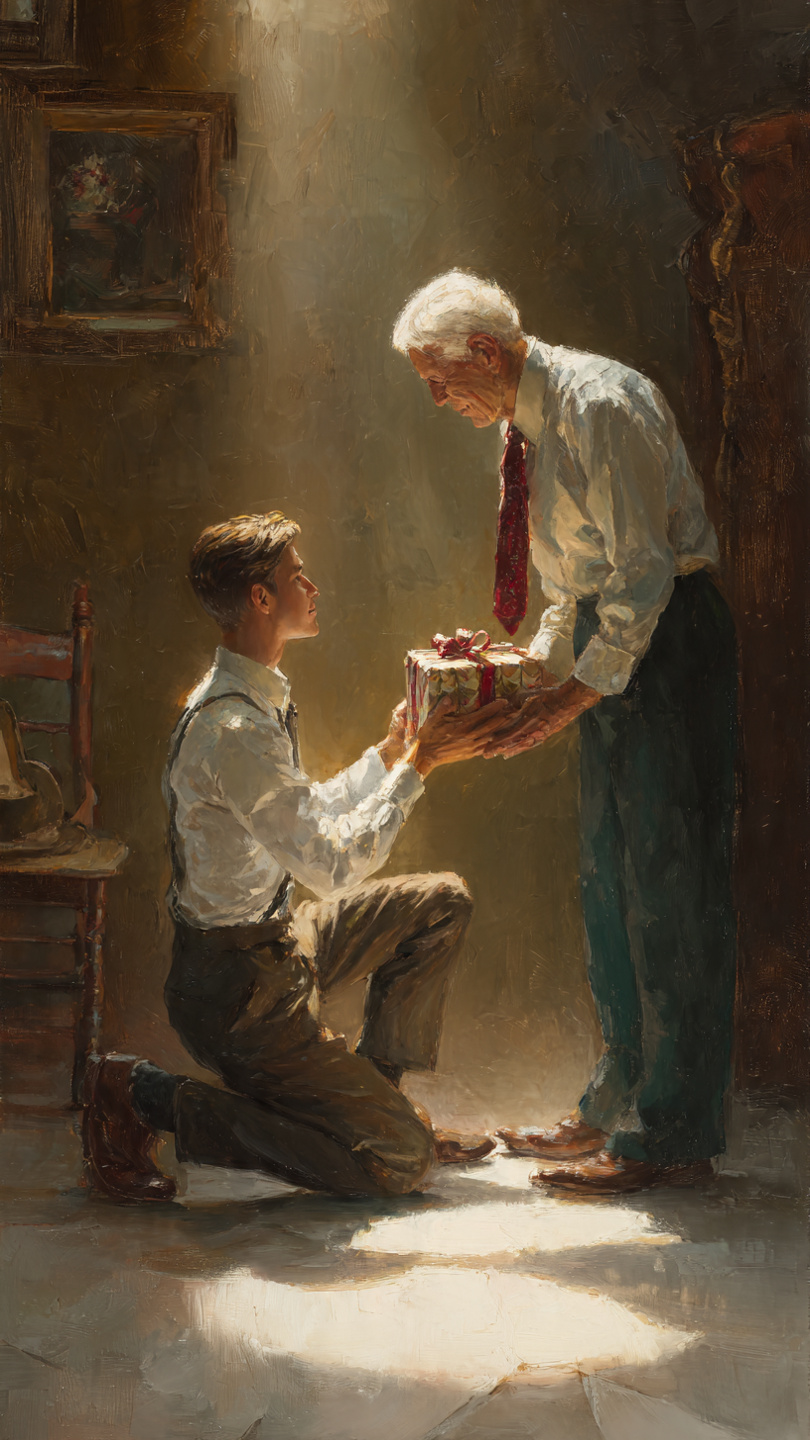
Forgiveness is a gift.  There is ‘giving’ in for-GIVE-ness.  (Thanks to the English language.)  To for-GIVE is also to fore-give; to give pardon ahead of penitence, or irrespective of whether the prodigal trespasser returns to request it.  Forgiveness is like an advance cheque (but not a blank cheque) when it is dispensed up front of apology.  It could be described as a response, where forgiveness had been asked.  It is like a dialogue, where both the penitent confession of the trespasser and the clement response from the forgiver grow into mutually sustained healthier exchanges between the parties.  Whether as advance cheque, as a response, or as a dialogue, there is still ‘giving’ in for-GIVE-ness.

Sentimental souls often measure ‘love’ by the size and number of rose flowers offered; yet love may be measured as much by the forgiveness it ‘gives,’ by the largeness of heart that gives forgiveness.  Intangible for-GIVE-ness is no less a gift than tangible rose flowers.  It takes love to give as well as to for-give.  In fact, it takes a larger heart to give forgiveness, and that heart is preferable to the larger hand that gives rose flowers but hides a malicious and bitter heart that hoards hatred.  He probably loves more who forgives than who gives.  Love is expressed by what it gives, but all gifts are not material.  Some of the most precious gifts are not touch-able or see-able, yet are greatly feel-able.

Forgiveness does not suggest that the other party had done no wrong; forgiveness is merely a choice of the one party to not count the wrong against the other.  That is why they cannot get forgiveness who hardly agree that they have done anything wrong.  There is nothing to confess or receive forgiveness for when they ‘did nothing wrong.’


An Apostolic Definition of Love

In 1 Corinthians 13:4-7, the Apostle Paul offers a definition of love that is rare.  If, according to that passage, love is patient (or gives patience), gives kindness, does not envy the other, is not proud in relating with the other, does not get soon angry, does not push itself up, does not believe the wrong about the other but ‘gives’ trust, etc., then true love is more a lifestyle than a moment’s gift, and we may measure it more by how it lives than by what it gives.  What true love gives is not as material as we would make of it.  Love is larger than the gifts it gives, deeper than the tender words it speaks, mightier than the material things by which it might sometimes be expressed.  In every giving, however, there should be a reciprocal receiving, as no gift is completely so without receiving.  All said, giving is merely one leg; receiving is the other leg.  Balance comes from both legs firmly on the ground.


Granting Forgiveness

Any gift may be hard to give, especially when it is costly; the same goes for forGIVEness.  The only way anyone can know that something has been given to them or to someone else is if the giver says so.  You cannot claim that the cake I intend to give to you is yours until I have said so.  Similarly, forgiveness is not merely wished to the other; it is given, and the giving is concretised and validated by the words that say so or show so.  When Joseph forgave his brothers, it was not with sealed lips.  The assurance was made in words.  The father of the Prodigal Son also, although he did not use the exact words, “I forgive you,” transacted words with the son, which expressed and conveyed assurance of the forgiveness.

Someone might wonder how to forgive.  The ‘how’ is primarily by words.  When people are unwilling to forgive, they often say it in words.  You probably have heard someone in their pain say, “I will never forgive him.”  Their unwillingness to forgive is expressed in words, so should forgiveness also be delivered in words, even though the words might be heavy and hard.

Sometimes people ask casually for forgiveness as if it were some cheap coin to be tossed at them as one walks on.  Forgiveness, especially when the trespasser has done nothing to merit it, can be a hard and painful sacrifice given only out of respect to the higher laws of life and living.  It should therefore not be trivialized by those who request it.  Only the one who has known the pains of the offence knows what it costs to forgive.

Because of the pains out of which forgiveness is procured, it is sometimes hard to say the words.  The way to birth forgiveness is still by saying the words.  Sometimes the deep pain in the heart still persists even after someone has said that they have forgiven, which makes them question if they have truly forgiven.  The persisting pains notwithstanding, speaking the words is where to start.  It is an assuring pronouncement to oneself and to the other(s).  With time, the willing heart will catch up with the reluctant legs; the heart, as it gradually heals, will feel less pain, and strengthen the legs to continue in the way.


Forgiveness by Choice

Forgiveness is a gift, and a gift is usually a choice that the giver makes.   A forced gift cannot be called a gift.   To that extent, even the gift of forgiveness can neither be forced upon someone nor compelled from someone.  God never forces anyone to forgive.  It is a choice that the forgiver has to make, which is why Jesus used the ‘if’ clause in addressing the subject in Mark 11:26: “But IF ye do not forgive…”  It is a choice, but a choice with relative repercussions, whichever way the choice goes.

Customised Forgiveness

No matter how generous forgiveness might be, it is not ambiguous.  Forgiveness is specific to an offence.  No forgiveness today covers for crimes tomorrow.  Every fresh trespass has to apply for its own pardon.  Every new offence needs its new forgiveness.  If someone kills my dog, for example, and repents, they will get forgiveness for that wrong regretted and confessed, but that does not licence them to proceed from that place of pardon and kill my goat tomorrow.  The offence in killing the goat will not be ignored because of the previous forgiveness for killing the dog.  If the same person should kill my sheep the next day, another file will be opened, which must also be addressed on its own merits.  Despite yesterday’s pardon for killing the dog, the same transgressor could go to jail tomorrow for killing the goat and the sheep.  How does Jesus address the matter?

And if he trespass against thee seven times in a day, and seven times in a day turn again to thee, saying, I repent; thou shalt forgive him (Luke 17:4).

The implication of the verse above is that, for each of the seven trespasses, a confession is required or applied for.  Seven trespasses, seven returns and confessions; each trespass, its own confession.  The previous third confession will not answer for the fresh fourth or fifth trespass.  However, one confession coming after the seventh trespass may answer for all previous offences, and one might then not have to name the offences one by one, number by number.  According to Acts 17:30, “the times of this ignorance God winked at; but NOW commandeth all men every where to repent.”  It is taken that the past was a ‘time of ignorance’ when the trespasser did not know what they were doing.   Repentance that comes from the point of awareness cancels all previous sins.

To be continued …


One year ago, in March 2025, we posted the last in the series from the book on Forgiveness, thereafter commencing the serialisation of the book, One Woman, Five Husbands: Christian Marriage, Divorce and Remarriage and other messages that followed, prophetically addressing the seasons.  Copies of that classic book on Christian marriage and divorce have been out since September 2025. We are urged to return and resume the series on Forgiveness from where we paused a year ago.

For copies of the book Forgiveness (and others not yet out of print), kindly reach us through the contact details provided, or visit the online shops through the links supplied below for the electronic editions of the books so listed – at Amazon and Selar books.

https://selar.co/m/kontein-trinya1?search=forgivenessForgiveness

https://a.co/d/01BtigENOne Woman, Five Husbands: Christian Marriage, Divorce and Remarriage

https://selar.co/903394Balaam

https://selar.co/1g4486Stray Bullets

https://selar.co/443i94Mystic Markets

https://selar.co/q4454bBeyond Holiness


WHAT TO EXPECT AT THESE RETREATS

The Preacher retreats are usually a special gathering for believers seeking spiritual renewal and a deeper fellowship with God through passionate prayers, intense study of the Word, and lively worship.  Previous participants consistently declare that the spiritual atmosphere at the retreats is the kind of deepness their soul always longed for, somewhere every serious Christian (especially ministers) should be at, something that reminded them of the fire in the early days of their Christian experience.  Starting from Friday evening to Sunday morning, each retreat is usually very intense but very memorable three days.

The retreats usually offer refreshing encounters of no regrets. Meeting brothers and sisters from different Christian and social backgrounds and relating freely and refreshingly as if you had known yourselves all your life time, is another takeaway that many recall.  The retreats are guided by the spiritual principle of cooperate ministrations, giving everyone a room to bless everyone else with their unique spiritual gifts and talents, as one big family.

As part of the personal preparations for the retreats, intending participants are usually encouraged to study a given book of the Bible while also observing a weeklong daily fast from the Monday of the retreat week.  Participants break the daily fasts with a dinner, and on Sunday morning, there is breakfast before departure, after a brief service concluded with a memorable Holy Communion from which there have usually come testimonies of remarkable healings.

See you at the next retreat …


For respective retreat details, see registration and contact information on the fliers, and note the other dates below:


Ghana: October 16-18, 2029

Abuja, Nigeria: June 2026

Port Harcourt, Nigeria: September 11-13, 2026

Australia: 2027

Uganda: 2027

?

RELIGION WITHOUT RIGHTEOUSNESS

1.  Something I Had Never Seen

Sometimes you think you have read the Bible many times enough until you come upon something you never saw all the times you read the Bible.  This morning, in the course of other matters, I felt prompted to read the Parable of the Good Samaritan (Luke 10:25-37).  I picked up my Bible, went to my table, sat down, and read it, and I came upon something I had never seen there: the irony of extreme religion without compassion, without mercy, without righteousness.


2.  Between Creed and Kindness

In that parable, a traveller on his way from Jerusalem to Jericho falls among robbers who strip him of his possessions and leave him half dead along the highway.  Luckily, an eminent priest comes along, but he does not go near the dying man.  He passes by “on the other side” of the road, keeping a pious distance.  He is guarding his holiness, lest, according to the law, he should touch a dead man, or a dying man who eventually dies in his hands, and he becomes defiled (Ezekiel 44:25; Leviticus 21:1-3).

Next, a Levite passes by.  The other was a Bishop, this is a church worker, an ordained elder, an assistant pastor of the same brood as the previous clergyman.  The bishop did not draw close.  He didn’t dare.  He looked ‘safely’ from afar.  This one manages to get close, but merely to take a look; “he came and looked on him”; he took a video of the show, and also “passed by” quickly to “the other side” of the road, lest he be defiled by the dying victim on the road.  He was being careful not to break the law.

The injured man was very unlucky that day.  First, he fell into the hands of robbers; and next, into the hands of brothers. He heard their footsteps and hoped that help had come from holier men.  Sadly, each time, he was disappointed, with no strength to cry.  With the robbers, it was physical pains; now, the pain was also in the soul.

The third person to arrive the scene was a Samaritan, a stranger to the dying Jew whose religious kinsmen had passed him by as if they would rather see him rot on the street than that they should lose their legalistic claims to holiness.  They were persuaded that they were pleasing God, even if that should cost other’s lives.  They were ‘keeping’ the rules of God, proudly and stiffly.  Their attitude to people, to issues, especially to people’s calamities, was very religious but very loveless; very theological but lacking in compassion.  The law filled their heads but did not touch their hearts. They never said it, but for all they cared, you could die in your bloody wounds so far as their theology was not injured.  They keep to “the other side” of the road – their holier side of life.  They withhold help not because they cannot give it, but because they are restrained by a law that deadens the heart; a stiff theology that elevates soulless rites.  Thankfully, help came to the dying man from a most unlikely source.

Jesus often encountered their kind, especially in the temple.  They were gladder to see you sick or dead than that you ‘broke’ their sabbath with the gladness of a priceless healing.  They fought to keep the purity of obedience to God, yet what indeed they defended was not the Lord but their law – the tradition of the elders (Mark 7:5).  They could kill you on the sabbath for ‘breaking’ the sabbath with an offering of kindness (John 5:10; Mark 3:3-6).


3.  What they Lacked  

The story says that when the Samaritan saw the dying man, “he had compassion on him.”  That was something the pulpitless Samaritan didn’t preach but possessed; something the others preached but did not have: compassion, kindness, human feeling.  They preached a holiness that did not have a practical human face.  They proudly bore a title they did not live.  They were always on the road going somewhere, carrying a religion without a heart.  Sadly, there are more of them on the highway of life than those who will stop to pour the first aid of “oil and wine” into killing wounds.  Deformed by dogma, they often find scriptures for their choices.

Jesus had told that parable to answer a Jewish lawyer, an expert teacher and interpreter of the laws of Moses, who had asked what one could do to inherit eternal life.  The verdict of that lawyer was that the true neighbour was the one who “shewed mercy to the dying man.  Jesus used the word “compassion” to describe the Samaritan; the lawyer used the word “mercy.”  Both words described the two great virtues that were lacking in the lives of the temple clan.  They had the theology but lacked the spirit; the Samaritan lacked their theology but had a noble soul.  They were religious; he was righteous.

What has a man without a heart of mercy got to do in the frock of a priest?  What has he got to do with the title of a Levite?  What kind of sermons will he preach?  According to Hebrews 5:1-2, such a person is unqualified for the office of a high priest.


4.  A Prayer

Help does not always come from quarters most expected.  At times, divine help comes from strange places – like Elijah’s timely rations from greedy ravens (1 Kings 17:6).  Sometimes, one’s true brothers are not those who are so by blood and by creed.  Sometimes, your troubles merely reveal your true friends.  In the day you fall among thieves on the highway of life (God forbid) – financially, emotionally, physically, may God deliver you from priests without mercy and Levites without compassion.  May God send you help today, even if He has to send ravens.  Amen.

From The Preacher’s diary,

February 2, 2026.


THE FEARFUL SILENCE


1.  The Quietness Before the Storm

All silence is not golden, some is the quietness before the apocalypse.  All silence is not calmness, some is the stillness before the atomic catastrophe.  Sometimes we have misjudged silence until it was very late.  Early in secondary school, one of the relational lessons we learned was to be careful with quiet people, because you never know what is steaming under their silent lids.  The day they burst, even hell could be on fire.  Moses was the meekest man there was.  The day some two close folks thought to take advantage of that and speak against Him, heaven roared against them.  One of the two instantly became a leper, and other shut himself out of Promised Land (Numbers 12:1-9).  The day Moses himself got angry, heaven took notice in millennial ways (Psalm 106:33).  All silence is not a sign of peace.

Read more

His Nephew was the Angel

1.  Wingless Angels

Divine deliverance does not always come from above; sometimes it comes from below, which makes it no less divine.  Angels are not always winged, so we miss them many times (Hebrews 13:2; Acts 1:10; 24:4).

So much has been said and heard about St Paul, the world-famous preacher, sometimes in the image of Melchisedec, “Without father, without mother” (Hebrews7:3), without a wife, without biological children.  But Paul was a man, and he had a sister.  That is one part of the story.

Read more

Is God More Pleased with Preachers?

Jesus was baptised in the River Jordan, with spectacular displays following.  While He was stepping out of the waters, “the heavens were opened,” a dove came upon Him, and the voice of God was heard announcing, “This is my beloved Son, in whom I am well pleased” (Matthew 3:17).

Lately, that proclamation has struck me with a fresh interest, stirring a profound question to which you are probably the one to provide me an answer:  What about Jesus made Him well pleasing to the Father?  At that time, Jesus had preached to no multitude, healed no sick, and multiplied neither bread nor fish to feed thousands.  He had turned no water into wine, stilled no storm, cleansed no leper.  He was merely known as a carpenter’s son whose mother and siblings were also well known (Mark 6:3).  In other words, Jesus hadn’t started ‘ministry’ as we generally know it.  If He was no great preacher then, what was so pleasing to the Father about Him?  For what quality in Him did God so loudly and publicly proclaim Him as a “beloved” Son, one in whom He was not just pleased but “well pleased”?

Read more

The Jonah Show: Don’t Try This at Home (Part 2 of 2)

6.  Let’s Reason Together

God needed to do something to get this stubborn child’s attention again.  Perhaps it was time to call a family meeting (Isaiah 43:26); time to “reason together,” as He once invited in Isaiah 1:18, regardless of our inferior IQ.  How can a mortal reason with the Omniscient?  The Father doesn’t care.  He understands.

Moses had reasoned with God when the Almighty was so angry that He might have destroyed an entire nation in a flash.  Moses told Him, “Ahh, Lord, You can’t do that.  It will spoil Your great name before the Egyptians and other heathen nations who have come to fear You.  Besides, if I may remind my Lord, ‘Remember’ the promise You made to Abraham, Isaac and Jacob.  You are not a promise breaker ….”  The result?  “And the LORD REPENTED of the evil which he thought to do unto his people … And the LORD said, I have pardoned ACCORDING TO THY WORD” (Exodus 32:9-14; Numbers 14:13-20).  Wow!  A very reasonable God.

Read more

The Jonah Show: Don’t Try This at Home (Part 1 of 2)

1.  Disclaimer

“Don’t try this at home” is a popular catchphrase from the 1980s and 1990s.  It is the usual disclaimer and cautionary intro to TV shows featuring stunts, experiments, or other extreme activities considered dangerous for ordinary viewers, especially children, who might wish to attempt the actions shown.  While it still generally serves that earlier cautionary purpose, it is also deployed humorously in contexts that have little to do with potentially hazardous actions that the amateur viewer might wish to copy.  Here, I offer it as a telling intro to a common Bible story, which many have told from different perspectives.  Let’s call my story The Jonah Show, but remember, don’t try it at home.

Read more

OCCULT VIRGINITIES: PRAYER POINT

In one of our Nigeria universities, once upon a time, there was a campus female cult one of whose codes was to sleep with no man, and if any man should force them, he died.  Their virginity was one of their occult covenants for power in their territory.  They were virgins (or entered at some point into that state of celibacy) not because of a good upbringing or personal discipline or fear of God.  It was their sacrifice for occult power.

Read more

THE SPIRITUALITY OF YOUR MONEY (Part 2 of 2)

5.  The Voice of Your Gift

If gifts or monies were just the paper or coins in the hand, or the amount in the account; if there was no spirituality about money and gifts; if the character of the giver has nothing to do with the spirit of the gift, a passage like Deuteronomy 23:18 would be meaningless.  There, God strictly warns, for example, that “the wages of a harlot” and the proceeds from selling a dog – an unclean animal, must not be brought into His house, because “these are an abomination to the Lord your God” (NKJV).  “Abomination” is very strong language.

Read more

THE SPIRITUALITY OF YOUR MONEY (Part 1 of 2)

1.  Money Scanners

Even banks don’t usually take money at face value.  In critical cases, they pass money through a UV scanner to verify its status, which the naked eye might never detect.  Money is much more than the coins and paper notes or e-data that convey its value.  Money takes the spirit of its transaction.  Also, the property or service procured often takes the ‘name’ of the money used to purchase it.  What does all that mean?  The following story has answers…

Judas Iscariot had a contract with the haters of Jesus, to secretly ‘supply’ Him to them.  In the nocturnal boardroom of their mischief, the deal was signed for 30 pieces of silver.  The agreement was that he would take them to the Product site, from where they would take charge of the forward shipment themselves.

Like an eager supplier, Judas took them to where Jesus was holding a closed session with some of His staff and His Boss Abroad.  Judas made clever attempts to blend into the meeting as a late arrival.  He went straight to the target and gave Him a kiss.  That was the cue he had given to the business partners: whomever he kissed was the Product.  He kissed the Boss, gave Him away to His haters, then disappeared into the night.  Smart man.

Judas got his pay, but the nature of the transaction from which that money came tainted the money.  All dollar is dollar; all Euro is Euro; all Rupee is Rupee; all Yen is Yen; all Naira is Naira; all Cedi is Cedi, but it takes a spiritual scanner to further identify some money’s mystical character.  Judas’ silver coins, physically gleaming though they were, were spiritually tarnished by the corruption from which they had been earned.  To the natural eye, the coins were attractive; to the seeing eye, they were corroded and dangerous. Spiritual people are usually able to tell, as did the priests who had been dealing with Judas, mischievous though they were.

Down the lane, when Judas was struck by guilt and returned the same money to his erstwhile business partners, they made a very telling statement.  They said that certain monies carry the spirit of the transaction from which they were earned; that whereas all monies might look alike on the surface, there was a metaphysical dimension to them; that the money Judas had brought back was “the price of blood,” and therefore not spiritually safe to be put together with other monies, because it could corrupt what was there.  They were saying, in other words, that Judas’ money, even though ‘willingly’ given (or returned), was a potential pollutant, because it had come from transacting in “innocent blood.”  They understood the spirituality of money.  They understood that money is much more than the coins or paper or electronic codes that express its value.  They understood that money can carry a spirit, good or bad (Matthew 27:1-8).  Sadly, greed hurries, and it blinds.

Until that bloody transaction, the money with which Judas was paid had been holy, having been the devout offerings of worshippers.  When the temple authorities used it for a wicked transaction, its spiritual nature was accordingly altered.  The problem was not the money, whether it was crumpled notes or dented coins, whether it was dollars or pounds sterling.  The matter was the character of the transaction in which the money was involved.


2.  The Name of Your Purchase

Evil as those ‘business partners’ were, they understood the spirituality of money and were careful with whatever they received.  When Judas returned the money, they would not let it stay in the church account; they would not let it stay in their homes; none of them even dared to steal from it or gift themselves with any part of it.  They were unanimous that it had to depart immediately, before it should begin to cause trouble in their hands, like Achan’s loot in the camp of Israel (Joshua 7:10-13).  They decided promptly to buy a piece of land.  Anything.  Anywhere.  I am not sure if anyone was prepared to inspect the land before the purchase.  So far as it was available to be bought, that was sufficient.  “Good riddance,” as it is said, but that was only the beginning of another chapter.

Every purchase or receipt carries the product name.  The land that was bought with Judas’ money immediately took a name in the nature of the money that had purchased it.  That field became known as “the field of blood,” a name decided in the physical and spiritual realms by the character of the money that had purchased it.  If the same land had been bought with purer money than the ‘offering’ of a bloody kidnapper, it might have had a different name, maybe “Bethel,” or “The Field of God,” or “The House of Love,” or “The Place of Mercy” (Matthew 26:15; 27:5,7-8).  Judas’ money named (or renamed) the land with its particular bloody character.  Unfortunately, not everybody knows the ‘name’ of their house, or of their gift dress, their gift car, or their ‘free’ lunch in the archives of the spirit realm.  Like natures usually attract.


3.  Change of Status

Before the present purchase, that land used to be called The Potter’s Field.  It was a land where potters found fine clay for making beautiful vessels that decorated homes.  With the change of ownership, especially because of the kind of money that had been used to purchase it, there also came a change in the spiritual nature of the land.  Previously, it attracted artists, designers, craftsmen, workers in beauty, people who transformed ordinary mud into attractive vessels, specialists who gave great value to common clay.  Even holy men never feared to walk there.  With the coming of Judas, however, morticians took over where holy men and artisans used to prosper.  The same field began to attract corpses, death, decay, stench, fear, shame, and repulsion.  Holy men feared to tread there anymore, lest they be defiled with the bones of the dead (Matthew 23:27; Luke 11:44).

The kind of things that that field attracted seemed to have been determined by the nature or spirit of the money that had purchased it.  The money that was used to acquire it had come from transacting in the death of an innocent Person.  The land, accordingly, began to attract death. It became a cemetery for burying “strangers.”  If anyone was wondering about the mystery of the sudden change from Potter’s Field to “the field of blood,” from the making of beauty to a holding for corpses, from decorations to death, from the sounds of merry craftsmen to the silence and coldness of a cemetery, they only needed to check the details of its recent acquisition (Matthew 27:7-8; Acts 1:18-19).


4.  Third-Party Transactions

Sometimes people are careful about certain places and certain transactions, but they send their money to do things or go where they do not wish to be found themselves.  For instance, they might be embarrassed or terrified about going to a witch doctor’s shrine, yet not mind sending someone to consult there on their behalf; or they contribute to a general evil purpose, like a community’s annual fetish sacrifice, like a Halloween festival.  Although they had not personally undertaken those transactions, according to the story of Judas, what their money does is attributable to them.

It is reported in Acts 1:18, after Judas was dead, that he “purchased a field.”  Everyone knows that Judas did not do that transaction himself, yet it was credited to him because it was done with his funds.  The ‘receipt’ for the purchase of The Field of Blood bore the name of Mr Judas Iscariot.  We find the same principle in the matter of David and Uriah.  Even though Uriah was killed in battle by the enemy, God attributed that death to the man, far away from the crime scene, who had planned it.  God said that David was the killer, who had done it indirectly “with the sword of the children of Ammon” (2 Samuel 12:9).  It was their sword, but it was his hand; men saw them, but God saw him.

              From The Preacher’s diary,

January 2, 2026.

Show Buttons
Hide Buttons